Texas City Roof Replacement is a free referral service. We connect callers with independent local roofing professionals. A roof on the Galveston Bay shore lives a hard life: humidity that never really leaves, summer sun that bakes shingles brittle, and storm seasons that test every edge and fastener. Texas City homeowners call when a roof has been patched one season too many, when granules are washing out of the downspouts, or when a ceiling stain says the old surface is done. Call, describe your roof, and we connect you with a local professional who can measure it, show you what is actually up there, and explain the replacement options in plain terms.
Humidity working on your roof year-round?On the bay shore, damp air ages shingles, sealants, and decking every month of the year — not just in storm season.
Another storm season coming around?A tired roof meets each new season weaker than the last. A planned replacement is calmer than an emergency one.
Free referral service Independent local roofing professionals Serving all of Texas City, TXCall lines open day and night — (409) 336-0692
The short answer
What is roof replacement, and when does it make sense here?
Roof replacement means taking a worn-out roof off a home and building a new one in its place: the old surface stripped back to the deck, the decking checked and repaired, fresh underlayment and flashing fitted, and a new shingle or metal surface installed as one complete, weather-tight system. It is the right job when the roof as a whole — not one corner of it — has reached the end of its working life. In Texas City that moment tends to arrive earlier than the same roof would manage inland, because Gulf humidity, hard summer sun, and bay storms all take their share every single year.
Most calls start with a roof that is telling on itself. Shingles curling and shedding their grit, a stain that comes back every rainy stretch, tabs found in the yard after each blow, or a roof whose age nobody in the family can actually pin down. A straightforward renewal follows the path set out under roof replacement, and it begins with the step homeowners rarely think about: the roof tear-off that finally shows what condition the deck is in. Sorting out which situation you are in takes about a minute on the first call.
When you call, expect questions about the roof you have now — its material, its rough age, and what it has been doing lately — not a sales script. From there, we connect you with an independent local roofing professional. Your provider measures the roof, looks at the deck and the details around chimneys and vents, and talks through surfaces and scope that suit your home and its exposure to the bay. Any decision about going ahead is made with that information in hand, directly with your provider. Nothing is ordered, scheduled, or agreed to on the first call.
Services
Roofing services you can be connected with in Texas City
Replacement is the focus here, and everything else on this list supports it — the inspection that tells you where a roof stands, the tear-off that starts the job honestly, and the emergency help that protects a home when a failing roof gives way at the wrong moment.
Roof Replacement
The core service: the old roof comes off, the deck is inspected and repaired, and a complete new system goes on — underlayment suited to humid bay weather, flashing renewed at every junction, and a shingle or metal surface fitted to your roof's exact planes. A full roof replacement is the right conversation when patching has stopped holding, when a home you plan to keep needs a roof with a future, or when a storm has made the decision for you. The visit covers materials and scope honestly, including where a smaller job might serve you just as well for now.
The most common renewal in Texas City: worn shingles stripped, deck repaired, and modern architectural shingles fitted with coastal detailing. A shingle roof replacement suits most mainland homes and budgets, and today's heavier shingles handle bay weather far better than the three-tab roofs many older streets still carry.
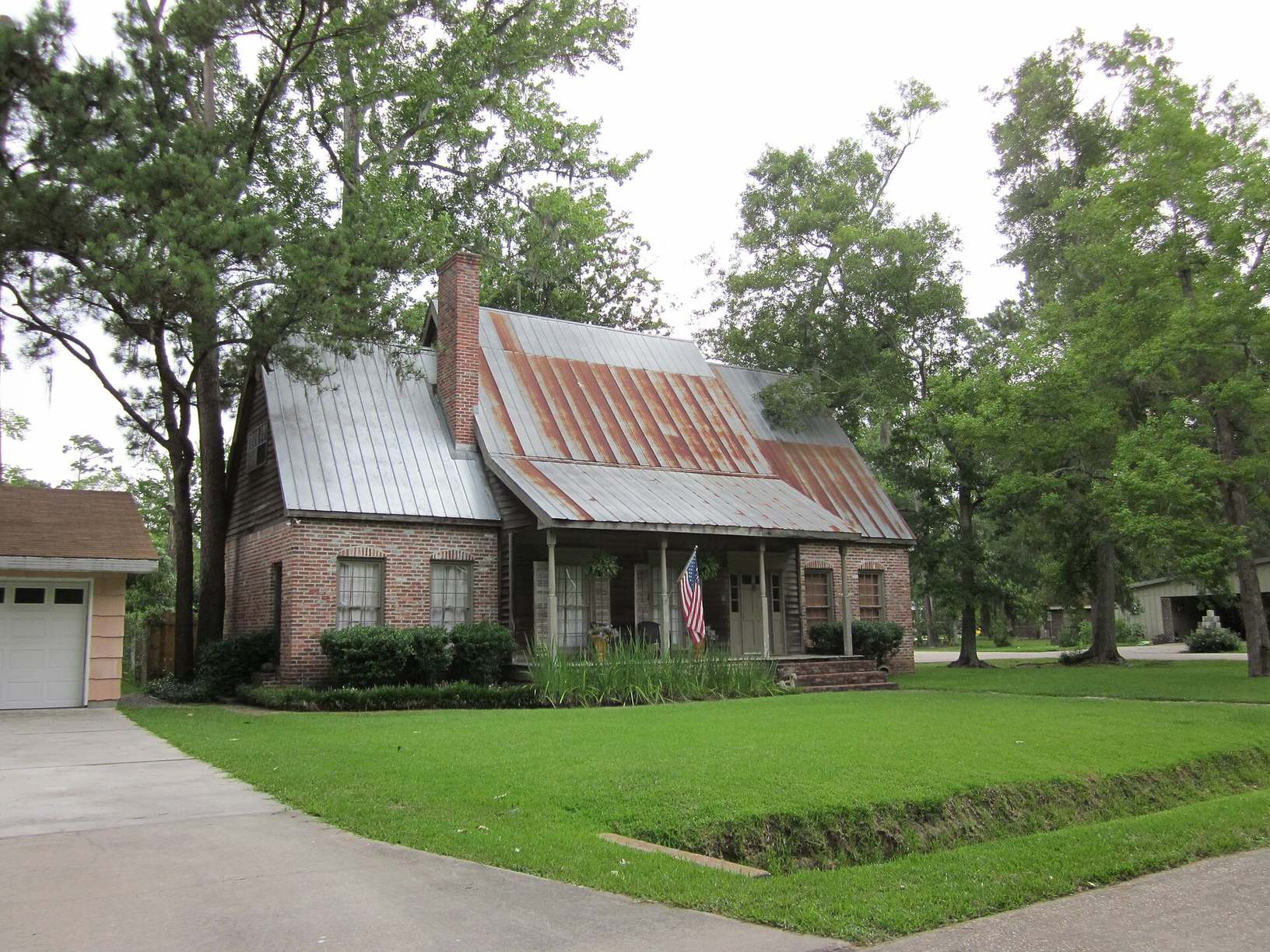
For exposed lots near the bay and owners settling in for the long term, metal roof replacement swaps an aging surface for locked-seam panels that shrug off driven rain and humid salt air. It is the larger-scope option, and the visit lays out honestly where it earns that scope and where it does not.
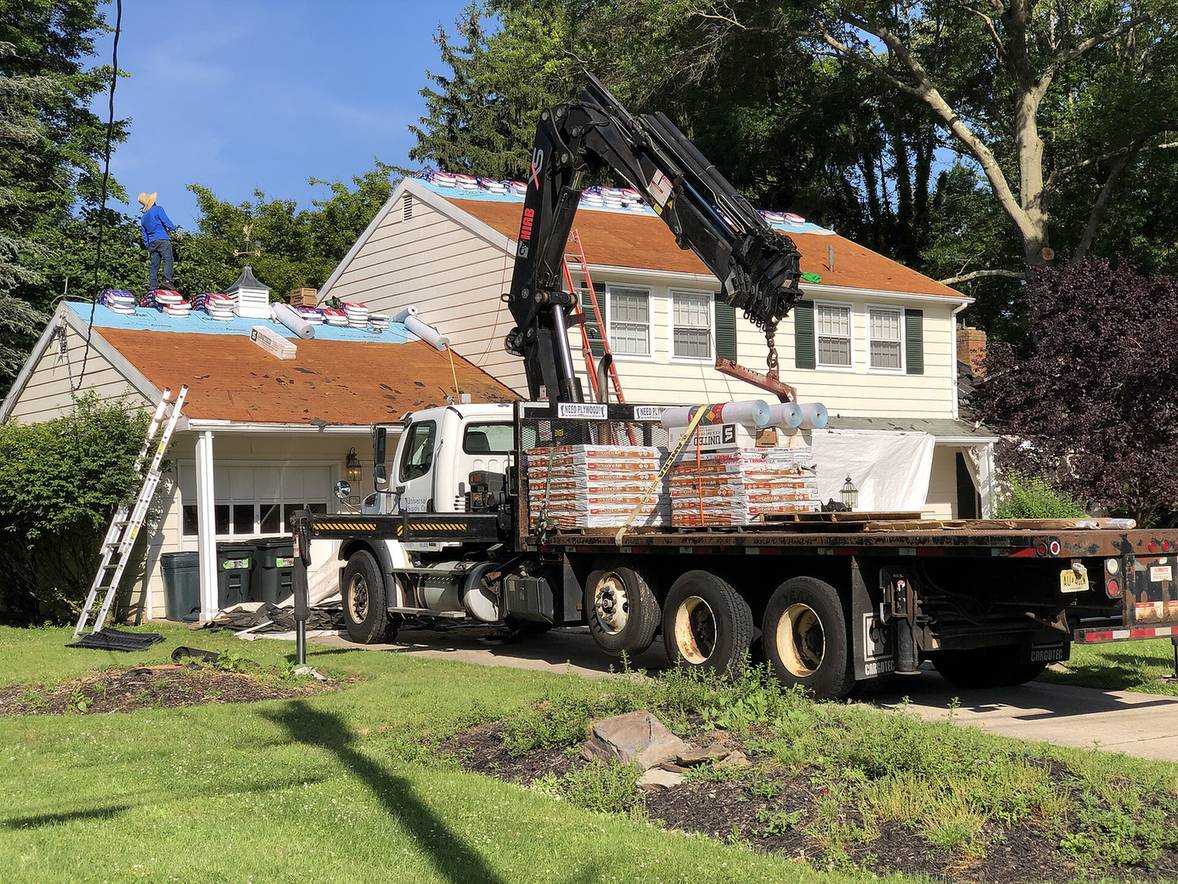
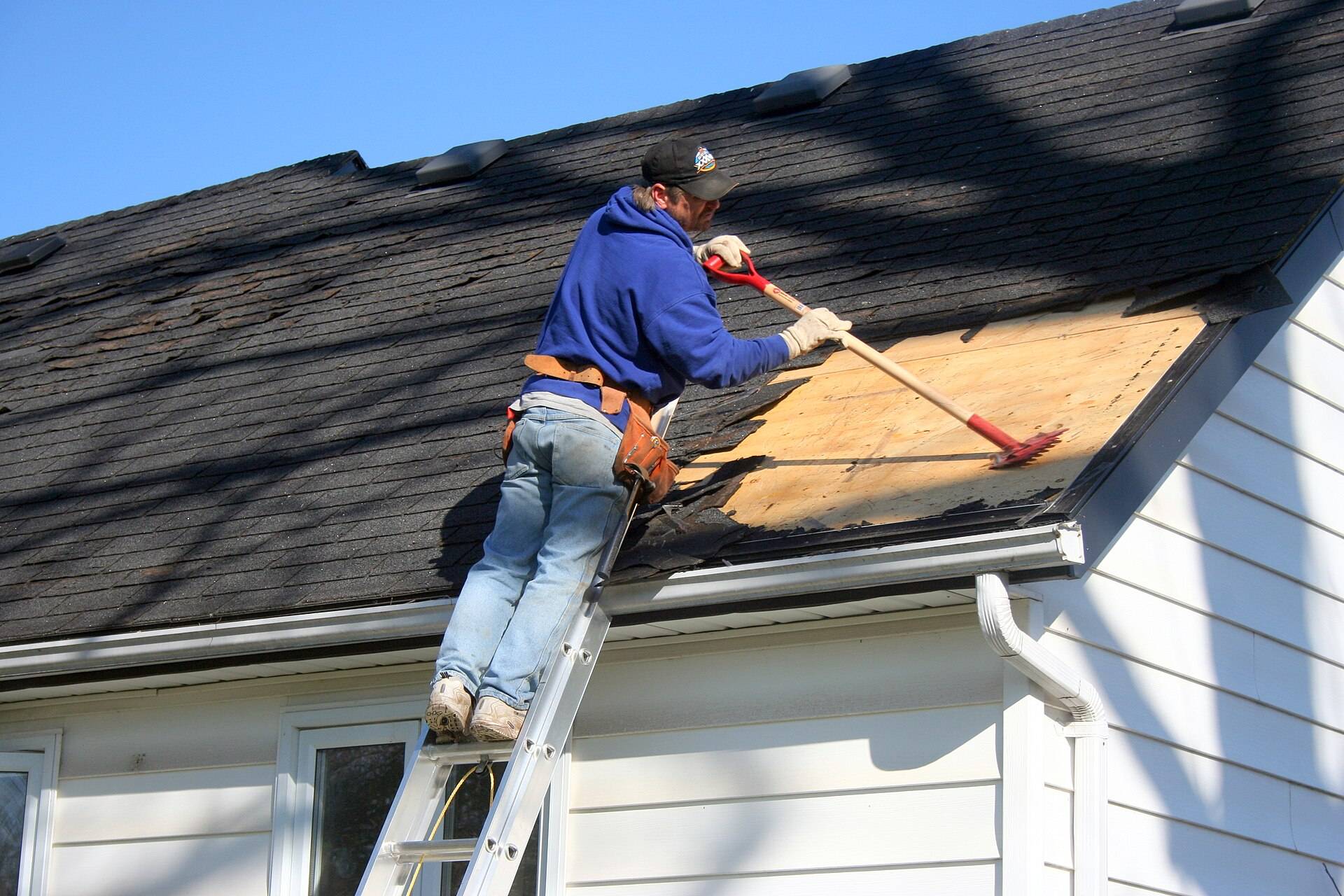
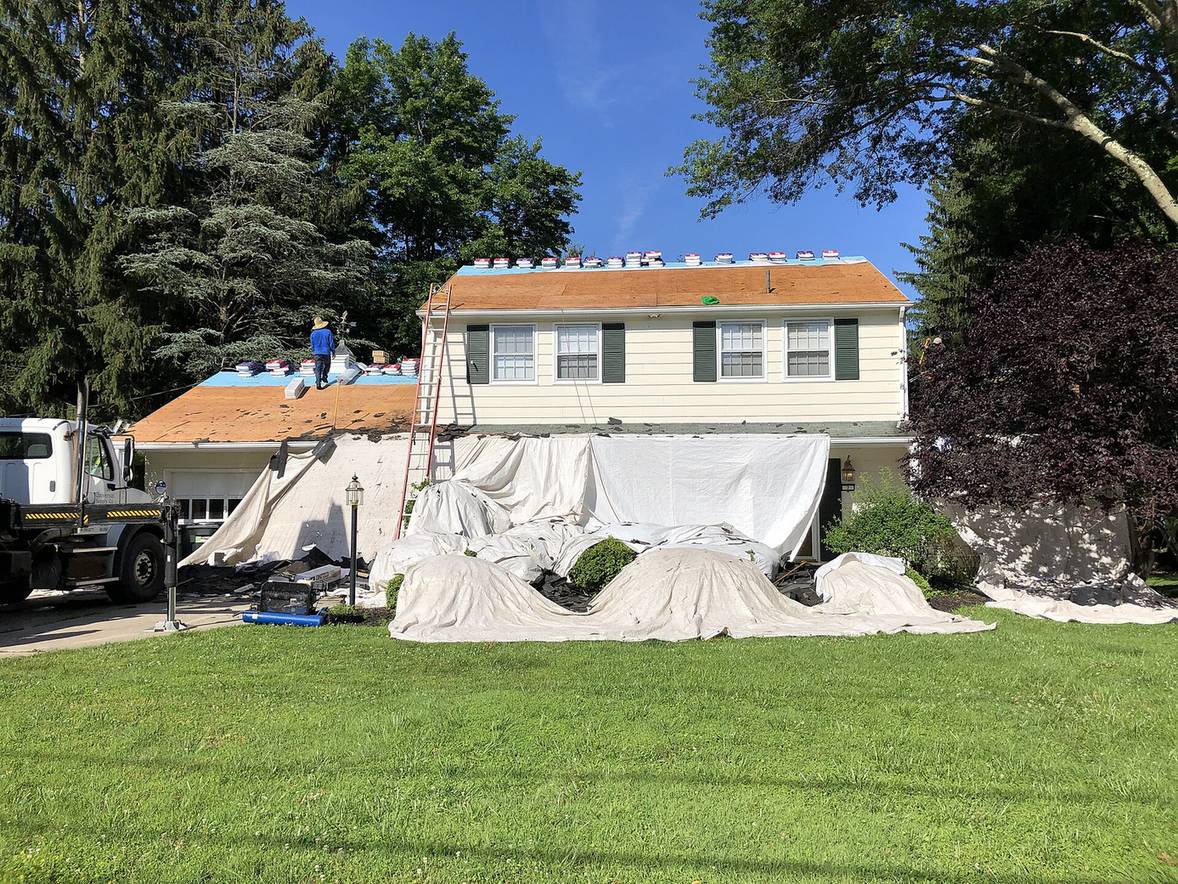
Every honest replacement starts here. A roof tear-off removes the old surface layer by layer, exposes the deck nobody has seen in years, and turns guesswork about your roof's condition into facts your provider can show you before the new system is planned.
Not sure where your roof stands? A roof inspection reads the whole system — surface, flashing, decking clues from the attic, ventilation — and gives you a straight account of remaining life and what needs attention now versus later. Buyers, sellers, and owners after a hard storm season use it to replace guesswork with a documented look before any replacement decision is made.
A section torn open by overnight wind, a limb through the roof, water coming through the ceiling while rain is still falling — some calls cannot wait for a quiet week. Emergency roof repair help is one call away, day or night, when a Texas City roof needs urgent protection.
Roofs in this climate rarely fail all at once — they send warnings first, usually after a storm or during the long humid stretch of summer. If two or more of these sound familiar, it is worth talking through a roof replacement before the next season arrives.
Tabs and shingles in the yard
Pieces on the lawn or in the driveway after every windy night. Each storm that lifts an edge lets the next one push water further underneath.
Granules washing out
Grit piling up at downspout outlets and along the driveway after rain. That grit is the shingle's protective surface leaving, a little more with every downpour.
Stains that keep returning
A ceiling ring that fades in dry weeks and darkens after rain means water has a reliable path in. Painting the ceiling never closes the path.
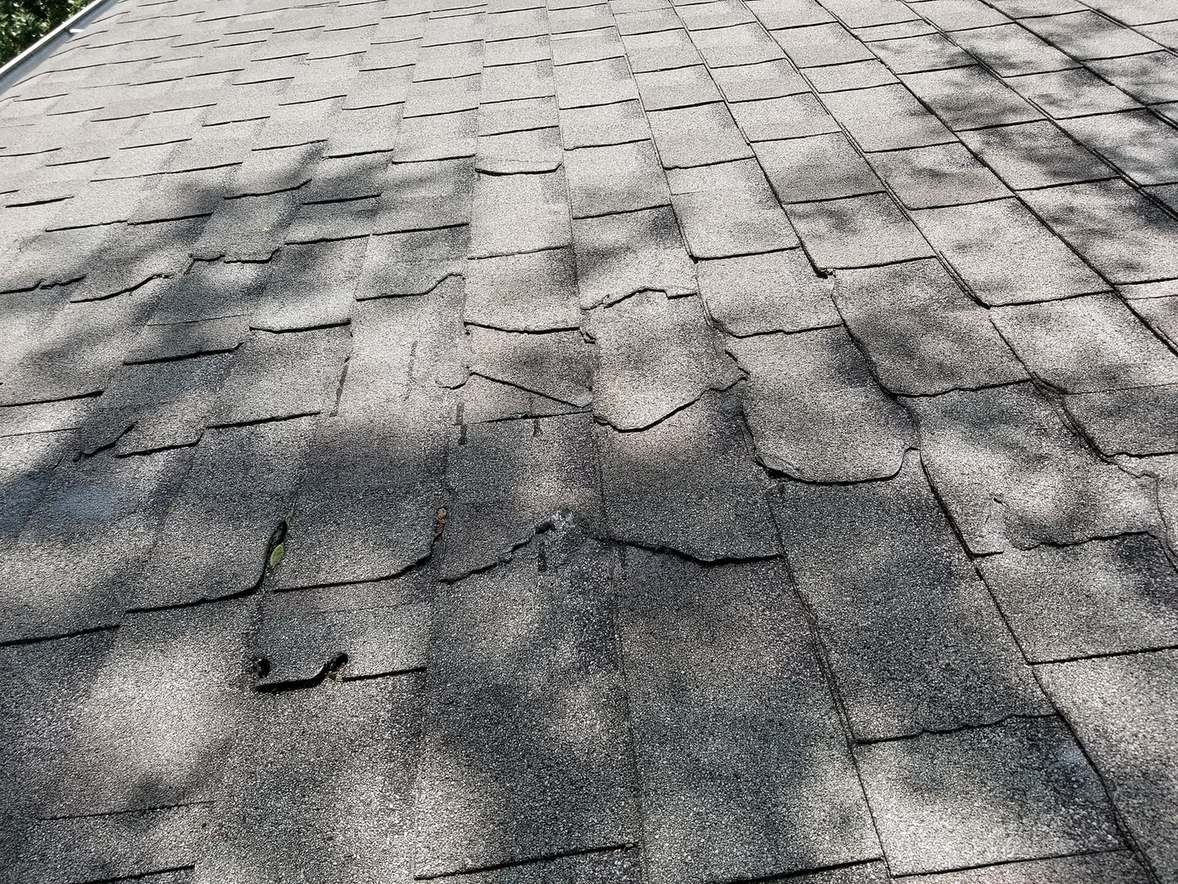
Curling, brittle shingles
Edges cupping and corners cracking after years of Texas sun and attic heat. Curled shingles shed water poorly and give the wind something to grip.
Repairs that stop holding
A history of patches that each lasted a season or two. When fixes stop working, the surface they attach to is usually the real story.
A roof nobody can date
If nobody knows when the roof went on or what is layered under it, a documented look replaces guesswork before you plan around it.
Any single sign can have a small cause, which is exactly why a proper look beats guessing from the ground. If water is actively coming in, a section is off, or a limb is down on the roof, skip the deliberation and go straight to emergency roof repair. Otherwise, a conversation about what a replacement would involve — tear-off scope, deck condition, surface choices — takes one phone call and leaves you with real information.
In-depth guide
Why roofs work so hard in Texas City — and what a replacement does about it
A roof in Texas City does a harder job than the same roof a hundred miles inland. The city sits on the mainland shore of Galveston Bay, wrapped in humid Gulf air, and its housing stock — postwar streets built for refinery and plant workers, established subdivisions, and the newer master-planned builds out toward Lago Mar — all ages against the same combination of damp, heat, and storm weather. Understanding what your roof is up against makes the replacement choices in front of you much clearer.
Humidity: the pressure that never takes a day off
Storms get the attention, but humidity does the daily work. Bay air keeps roof surfaces damp longer after every rain, feeds the dark algae streaks that creep down shaded slopes, and holds moisture in attic spaces where it softens decking and ages the sealants that flashing depends on. In a refinery town like this one, plenty of roofs also sit over homes that run their air conditioning hard for much of the year, and a poorly vented attic bakes the roof from below while the sun bakes it from above. Shingles caught in that squeeze dry out, curl, and shed their granules years sooner than the same product would inland.
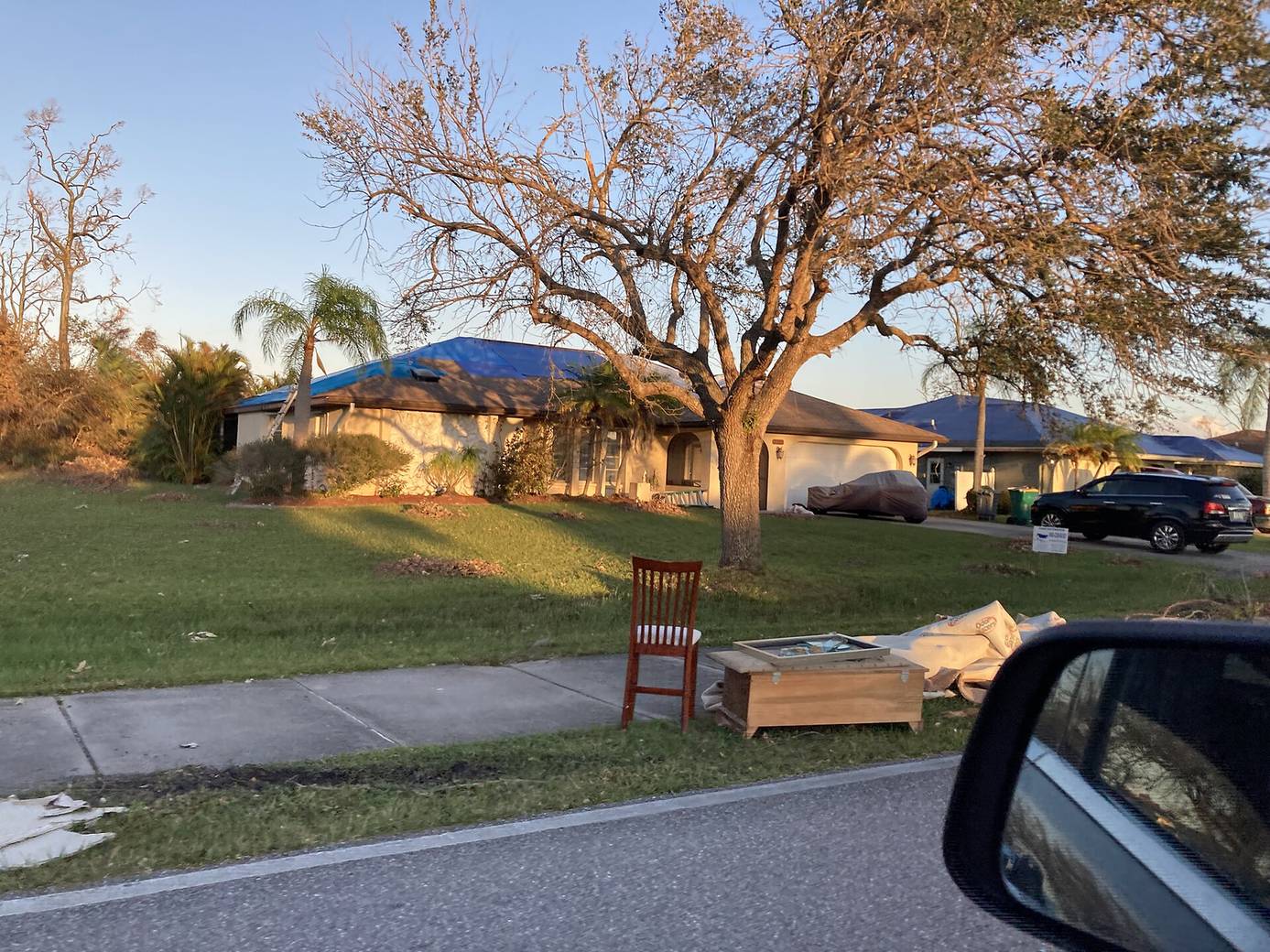
Heat and sun are the second pressure. Long Texas summers expand and contract roofing materials daily, work fasteners and seal lines loose a fraction at a time, and turn older asphalt brittle enough to crack under a footstep. Then the bay weather arrives to test the result: tropical systems push rain sideways under laps and lifted edges, gusts worry at ridge caps and eaves, and a roof that humidity and heat spent years loosening is the one that loses pieces. Texas City families have rebuilt after hard storms before; the roofs that come through best are the ones that went into the season sound.
What a proper replacement actually rebuilds
A good replacement is a sequence, and each step exists because of a failure the installer has seen before:
Tear-off to the deck: every old layer comes off, so the structure under the roof is seen — not guessed at — for the first time in years.
Deck repair: soft, stained, or storm-damaged decking is cut out and replaced, because a new surface fixed to a failing deck inherits every one of its problems.
Underlayment: a weather-resistant membrane goes down over the whole deck — the second line of defense that keeps wind-driven rain out of the attic even if the surface is ever breached.
Flashing and penetrations: chimneys, vent pipes, and wall junctions get new metal flashing, fitted and sealed so water is directed out and over, never in.
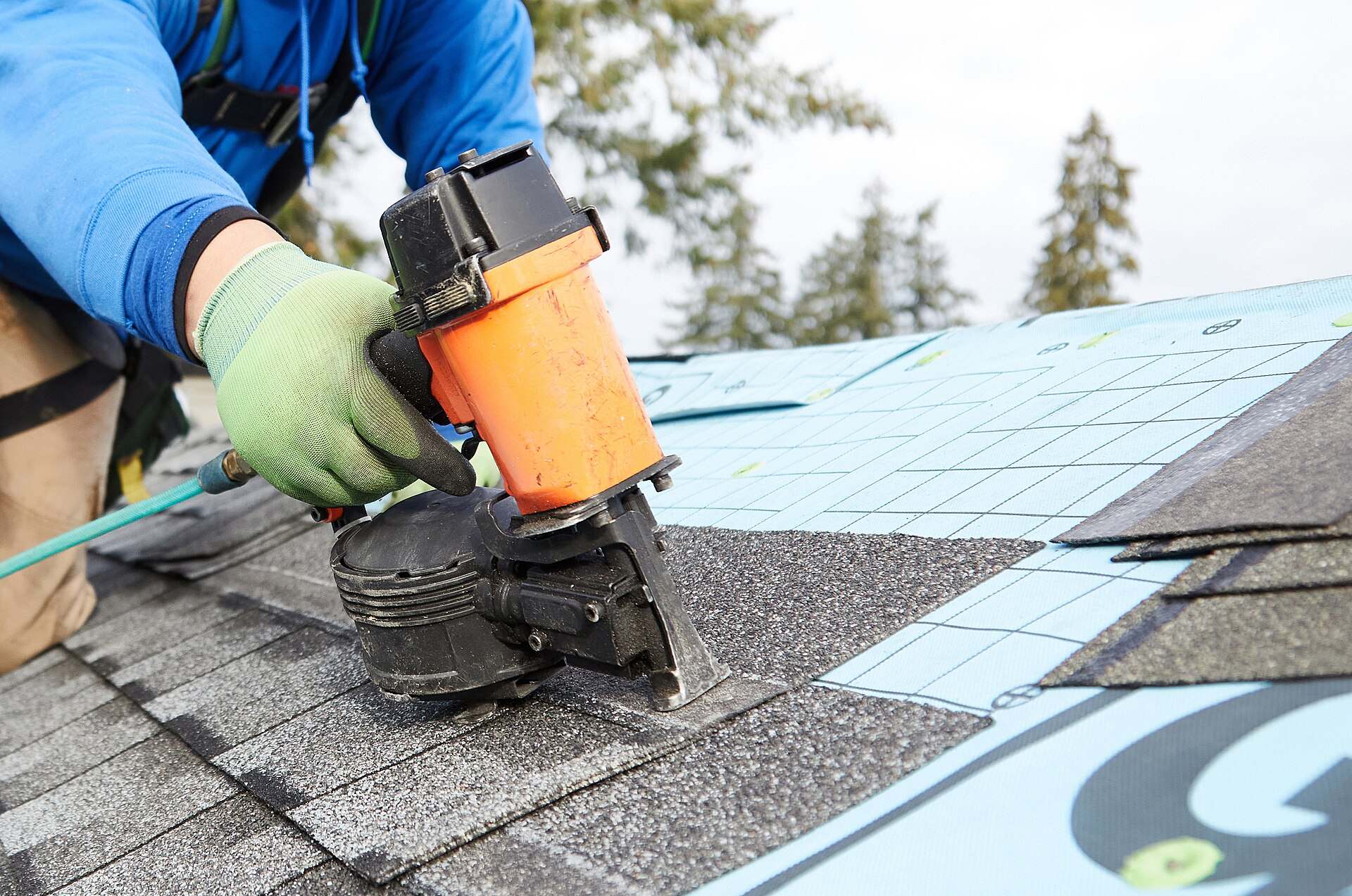
Surface, ridge, and ventilation: the new shingles or metal panels go on to pattern, ridge caps and edge metal close the wind-exposed lines, and attic ventilation is checked so heat and moisture stop working against the new roof from below.
That sequence is what separates a replacement that resets the clock from one that merely changes the roof's color for a few seasons. The surface is the visible layer; the deck, membrane, and details underneath decide how the roof behaves in its tenth humid summer, not its first photograph. For homes where the deck turns out to need real attention before anything new can go on, the dedicated page on roof tear-off explains how that first stage is handled and reported to you.
Good to know
After any storm strong enough to move patio furniture, a slow look from the ground tells you plenty: shingles out of line, debris piled against flashing, gutters suddenly full of grit. Note the date and what you saw — that short record genuinely helps your provider know where to look first.
Replacement across three generations of Texas City housing
The city's streets hold three broad generations of roofs. The older postwar and mid-century homes near the bay shore carry the deepest histories — multiple surfaces, storm repairs from several different decades, and decking that has earned a careful look. The established subdivisions from the following decades are mostly shingle roofs in or past their second cycle, where the question is usually timing rather than whether. And the newest builds, out in Lago Mar and the growth along the highway corridor, are reaching the point where builder-grade shingles begin curling at the edges even though the houses still look new. A replacement conversation sounds different on each kind of street, and a local professional reads those differences quickly.
Watch out
Be cautious of any cost figure offered before your roof has been measured and its deck condition assessed. Tear-off scope, layer counts, and decking repairs all change the real shape of the job, and a number given sight unseen can move a long way once someone is actually on the roof. Your provider can discuss costs with you directly once the roof has been looked at properly.
How it works
How it works, from first call to finished roof
Four simple steps, and you stay in control of every decision that involves your home and your money.
1
Call and describe your roof
Call (409) 336-0692 and talk through what you have: the roof's material and age if you know them, the signs that prompted the call, and which part of Texas City the home is in.
2
We connect you with a local professional
Based on your situation and your neighborhood, we match your request with an independent local roofing professional, and your provider arranges the visit and talks through what happens next.
3
Your provider measures and explains
Your provider measures the roof, checks the deck and the details around chimneys and vents, and lays out the realistic options — surfaces, tear-off scope, and what each involves — in plain language.
4
You decide before any work begins
You choose whether and when to go ahead, and your provider carries out the replacement you agreed on. No work begins on your roof until you have approved it with your provider.
To be clear about how this service works: Texas City Roof Replacement is a free referral service. We connect callers with independent local roofing professionals. When you call, we connect you with an independent local roofing professional — we do not replace roofs ourselves. The professionals callers are connected with measure, advise, and carry out any work you later decide to have done.
Why timing matters
Why a tired bay-shore roof rarely improves with waiting
A roof problem in this climate does not pause while you think about it. Humidity keeps working at decking and sealants every single day, and each storm season re-tests every edge the last one loosened. A lifted tab that let in a cupful of driven rain lets in a bucket once the underlayment beneath it has been wetted and dried a dozen times. Granules that wash out this spring are protection the shingles will not have next summer. The Gulf calendar keeps those tests coming, season after season.
What grows quietly is everything under the surface. Decking that stays damp softens, which loosens the very fixings the roof depends on in high wind. Water that reaches the attic wets insulation and ceilings, and in Texas City's older housing it can travel surprising distances along framing before it shows. A roof that might have been a planned, measured replacement this spring can become a storm-season emergency in September — the same job, on a worse timeline, with interior damage added.
None of that is a reason to rush into a decision today. It is a reason to get the information early, while the choice is still yours: have the roof measured and its condition explained, learn what a replacement suited to your street would involve, and then decide on your own schedule. If the news is that your current roof has honest years left, you have lost nothing but a phone call. If water is already coming in or a section is loose ahead of a storm, do not wait — see the emergency roof repair page and call straight away.
Cost factors
What affects the cost of a roof replacement
There is no honest single figure for this work, because the job is shaped by the roof itself and by what is found when the old surface comes off. These are the factors that shape it — providers discuss costs directly with you after measuring, when the scope is actually known.
Common cost factors
Factor
Why it matters
Roof size, pitch, and complexity
More surface area means more material and labor, and cut-up rooflines with valleys and hips take longer to fit than a simple gable.
Surface chosen
Architectural shingles, heavier shingle grades, and metal panel systems all sit at different material costs and suit different exposures.
Layers to remove
Each old layer adds tear-off labor and disposal before any new work begins, and older Texas City homes often carry more than one.
Deck condition underneath
Soft or storm-damaged decking found during tear-off needs repair before the new surface goes on, and the extent is only known once the old roof is off.
Flashing and penetration count
Chimneys, vents, and wall junctions each need custom flashing work, and older homes often have many of them.
Ventilation corrections
If the attic needs venting work to stop heat and moisture working against the new roof, that is sensibly done while the roof is open.
Because these factors combine differently on every home — a postwar ranch near the bay and a two-story in Lago Mar are different jobs in almost every row of that table — the reliable cost conversation is the one held after measuring, with your roof's actual scope in front of you both. Ask your provider to walk through how each factor applies to your home.
Areas Covered
Neighborhoods covered across Texas City
Roof wear is not spread evenly across the city — it follows the age of the housing, the distance from the bay, and how open each street is to Gulf weather. Here is how it looks in the neighborhoods where callers most often ask to be connected with a local professional.
Lago Mar
Lago Mar is the city's big master-planned community, still growing along the highway corridor — and its earliest homes are now old enough for builder-grade shingles to start curling, shedding granules, and lifting in storm seasons. Owners there are often surprised to be having a replacement conversation about a house that still feels new. Read more about roof replacement in Lago Mar, including why first-cycle roofs on newer builds wear the way they do.
Mainland Park
Mainland Park's established streets hold the classic mainland pattern: ranch-style homes under mature trees, roofs renewed in layers over the decades, and decks nobody has seen since the last surface went on. Shade keeps these roofs damp, and their histories are written in patches. The page for roof replacement in Mainland Park covers what layered, shaded roofs usually need.
Pearlbrook
Pearlbrook is a quiet, established neighborhood where many homes are on their second or third roof — and where the difference between a tear-off done properly and a quick cover-over shows up fastest in humid weather. Owners here tend to call when repairs stop lasting through a full rainy season. See roof replacement in Pearlbrook for how those decisions usually unfold.
Beacon Point
Beacon Point's newer homes sit more open to the bay's weather, with less tree cover to break the wind and rain that come off the water. Roofs here age by exposure more than by shade: edges, ridge caps, and seal lines take the testing first. The guide to roof replacement in Beacon Point explains what open bay-side exposure means for materials and detailing.
Delany Cove
Delany Cove's streets on the bay side of town mix established homes with newer builds, all living in the damp air that drifts off the water. Roofs here are often discovered aging during a sale, a storm repair, or a stain that finally gets investigated. Read about roof replacement in Delany Cove and the checks that matter most for bay-side homes.
Everywhere else in Texas City
Live outside these five neighborhoods? Roofs across the city share the same humidity, storm seasons, and summer sun, from the older streets near the bayou to the subdivisions spreading west. If you are seeing the signs — curling shingles, grit in the gutters, a stain that grows — the same call is the right first step. Head to the contact page or simply call (409) 336-0692 and describe what you are noticing.
Before you call
Before you call: a quick checklist
A minute of looking before you dial makes the first conversation far more useful. None of this is required — but each item helps your provider know what to look at first.
What is on the roof now: shingles, metal, or a mix — and roughly how old it is, if you know, including any storm repairs you remember.
What you have noticed, and where: curling edges, missing tabs, leaks after rain, or grit in the gutters — and which slope or room is involved.
How many layers you suspect: if the home has been re-roofed before without a tear-off, say so — it changes the early scope.
How exposed the lot is: open to the bay, shaded by mature trees, or sheltered mid-block — exposure shapes the recommendations.
Anything actively leaking: if water is coming in now, say so first — and note whether a bucket is under it and any ceiling looks bowed.
With those points in hand, you are ready — call (409) 336-0692, walk through them, and we can connect you with an independent local roofing professional who can take the next steps with you.
FAQ
Roof replacement questions, answered
The questions Texas City homeowners ask most when a roof starts showing its age against the Gulf Coast climate — answered plainly.
What does a full roof replacement include?
A full replacement rebuilds the roof as a system, not just a surface. The old roofing comes off, the deck underneath is inspected and repaired where age or water has hurt it, new underlayment goes down, flashing at chimneys, walls, and vents is renewed, and the new shingle or metal surface is fitted with ridge caps, edge metal, and ventilation finished properly. The finished roof is walked with you, including what the tear-off found underneath.
How do I know my Texas City roof needs replacing instead of repairing?
The pattern tells the story. One leak at one flashing line is a repair. Curling shingles across several slopes, granules washing out of the downspouts, stains in more than one room, and repairs that stop holding within a season or two point to a system reaching its end. Age counts too: on the Gulf Coast, a shingle roof well into its second decade has usually given what it can. Your provider can assess the roof and show you the evidence either way.
Why do roofs wear out faster in Texas City than inland?
Three local pressures stack up. Gulf humidity keeps roof surfaces and attic spaces damp far more of the year than inland homes deal with, which feeds algae, softens decking, and ages sealants. Summer heat and strong sun bake asphalt shingles brittle. And Galveston Bay weather — tropical rain, driving wind, and hard storm seasons — works at every edge, seam, and fastener the first two pressures loosened.
Can a new roof go over my existing shingles?
Sometimes a second layer is possible, but it hides the deck from inspection, adds weight, and leaves old flashing in service past its life. In a humid bay climate, what hides under an old roof matters: soft decking and slow leaks stay invisible until they are a much bigger job. Most replacements here strip to the deck so the base can be checked and repaired first. Your provider can assess your layers and talk through both routes honestly.
Should I choose shingles or metal for the replacement?
Both are legitimate on the mainland shore. Modern architectural shingles are the gentler initial scope and suit most Texas City homes well. Metal earns its larger scope on exposed lots near the bay, on low pitches, and for owners planning to stay put for a long stretch of years. The honest comparison uses your roof's pitch, its exposure, and how long you expect to keep the home — your provider can lay both paths out for your measured roof.
How long does a roof replacement take?
Most single-family replacements run through tear-off, deck work, and fitting in a matter of working days once materials are on site, but size, pitch, layers, and deck condition all move the schedule, and Gulf weather can pause a job mid-stream. Your provider can give a realistic timetable after measuring your roof and will plan the tear-off around dry windows where possible.
What happens if the decking is rotten under the old roof?
It is shown to you and scoped before the rebuild continues. Damaged decking is cut out and replaced so the new surface sits on a sound base. Deck findings are the most common reason a replacement's scope changes, which is why providers discuss the job in stages: assessment first, tear-off findings second, then the agreed work.
Do newer subdivisions like Lago Mar need replacements already?
The earliest Lago Mar homes are now reaching the age where builder-grade shingles start showing their limits — curling edges, granule loss, and tabs lifted by storm seasons — even though the houses themselves still feel new. Whether a given roof needs replacement or a few more years of service depends on its exposure and condition, which an in-person look settles quickly.
What should I do if my roof is leaking right now?
Protect the room first: a bucket under the drip, towels down, furniture moved clear, and keep out from under any ceiling that is bowing. Then call (409) 336-0692 and say the roof is actively leaking. Urgent situations are connected as emergency help, and the replacement conversation can happen once the home is dry.
Can I get connected with help in my neighborhood?
Yes — we connect callers with independent local roofing professionals across Texas City, including Lago Mar, Mainland Park, Pearlbrook, Beacon Point, and Delany Cove, and streets beyond those as well. Call (409) 336-0692, describe your roof and what it has been doing, and we can connect you with a local professional.
Planned beats emergency
Thinking about a replacement? Start with a straight answer.
Curling shingles, grit in the gutters, a roof that worries you every storm season — those questions are easy to settle with a proper measure and an honest conversation. Call now, describe your roof, and we will connect you with an independent local roofing professional.